OpenUSD 1.0, Microsoft TRELLIS.2, and Echo World Generator
How OpenUSD 1.0, Microsoft's TRELLIS.2, and SpAItial's Echo world generator are reshaping 3D art, game environments, and interoperable pipelines, plus new tools from Plasticity and Gnomon.
It is Saturday, December 20th, and the releases in 3D and worldbuilding keep coming. I am also trying out a new segment that spotlights creators pushing the R&D boundaries, so let me know if it is worth keeping.
New tech updates
Microsoft releases TRELLIS.2
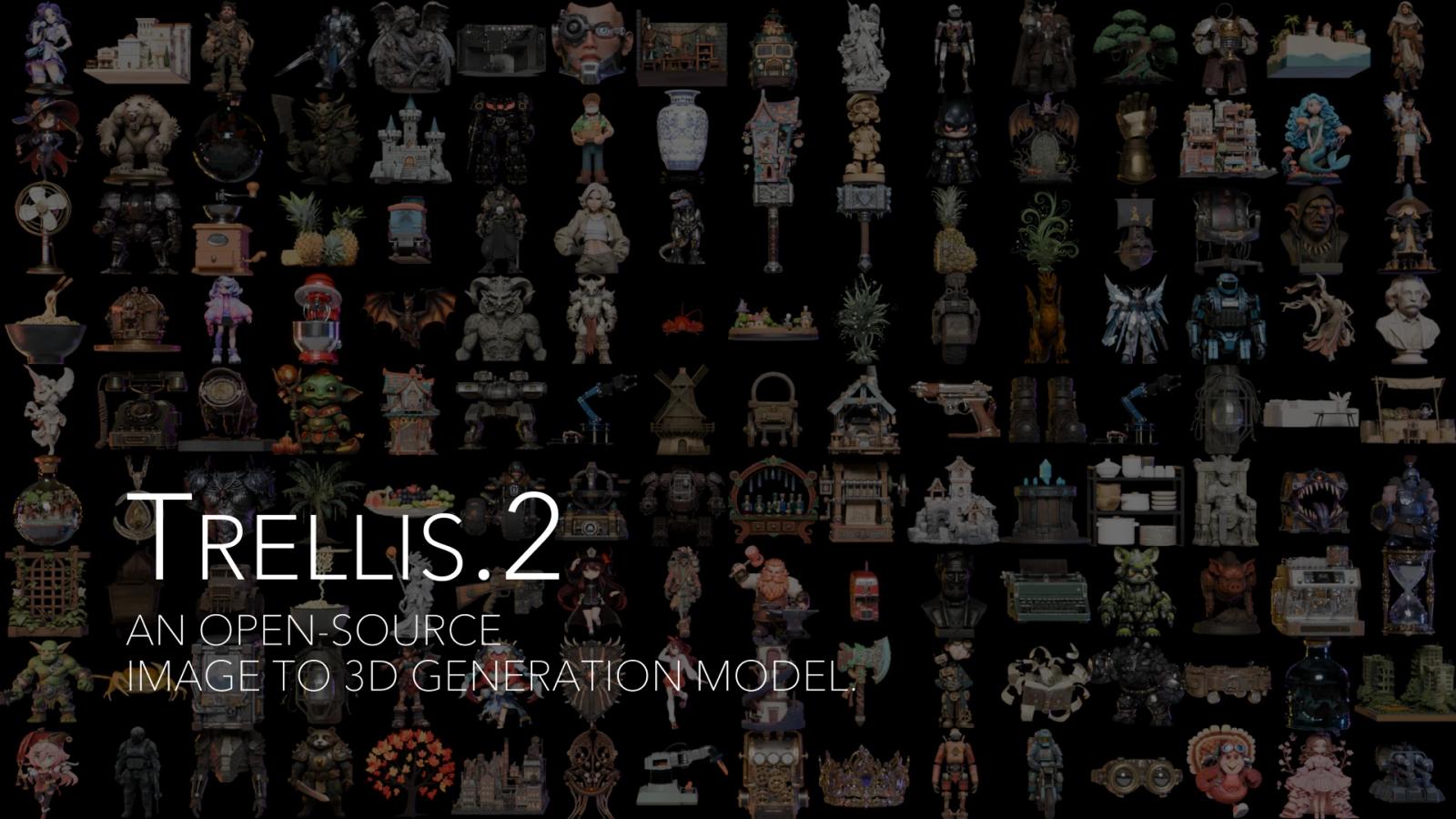
TRELLIS.2 is Microsoft's open-source model for generating high-resolution 3D assets from a single image. Its key idea is an Omni-Voxel representation that encodes geometry and surface materials together in a compact, sparse structure, which lets it produce arbitrary topologies like open surfaces and internal structures. It handles transparency, supports up to 1536 cubed, exports GLB and OBJ with PBR textures, and is on Hugging Face under MIT. The demos across hard surface, interiors, and texturing are seriously impressive.
SpAItial announces the Echo world generator
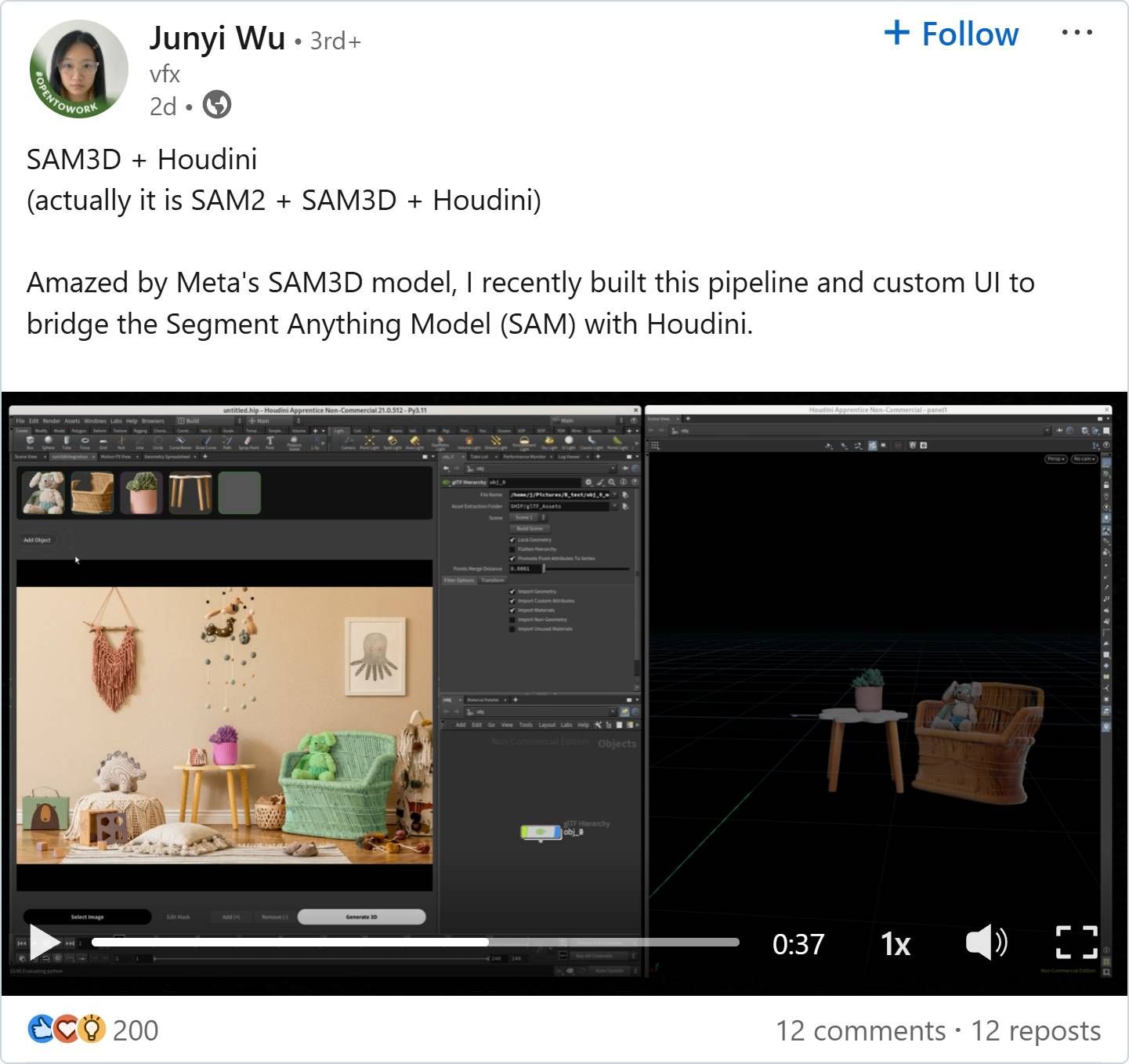
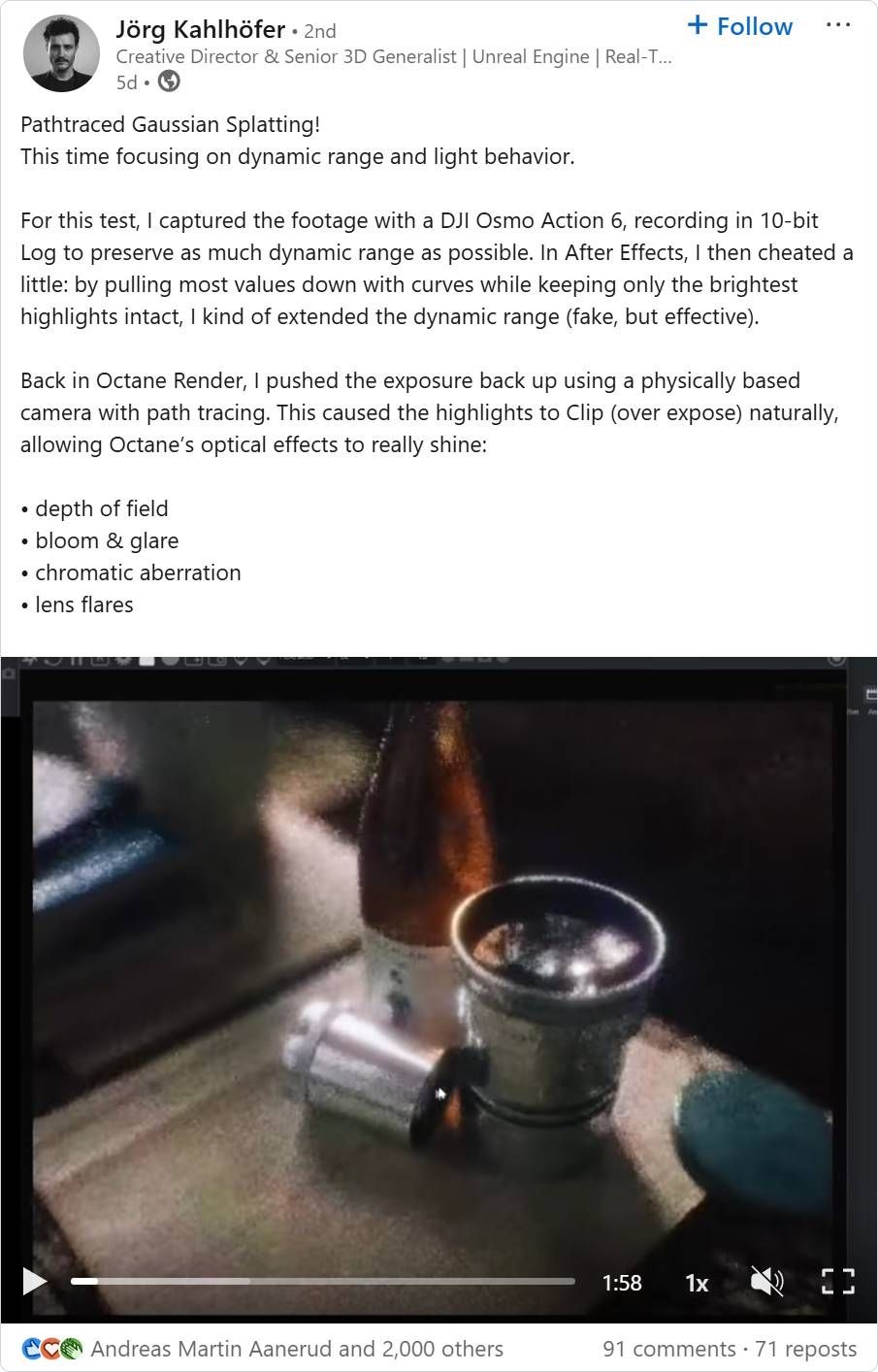
Echo is SpAItial's generative 3D foundation model that builds interactive environments from a prompt or reference image. Instead of single objects, it focuses on world generation, producing navigable scenes that stay consistent from every angle using 3D Gaussian Splatting for real-time browser rendering. You can edit a generated world, removing or restyling objects while keeping the global structure. It is in closed beta, aimed at gaming, architecture, and digital twins. With Marble and Moonlake also in the mix, 2026 is shaping up to be the first year creators really get hands-on with full 3D AI world models, not just asset generators.
Plasticity 2025.3 releases
Plasticity 2025.3 added an Instances workflow, where live copies of solids, sheets, and curves update automatically when the original changes, cutting file size and iteration time. It also added Plasticity Share, a web viewer that generates a shareable link for model inspection without the software, plus real-time surface continuity feedback and new SVG export options.

OpenUSD 1.0 is here
The Alliance for OpenUSD released the OpenUSD Core Specification 1.0, formally defining the data models, geometry, and composition logic. Separating the standard from Pixar's codebase gives the industry a canonical rulebook for structuring and exchanging 3D data, which should accelerate true interoperability across tools and push USD further into manufacturing, gaming, and digital twins.
Gnomon adds Learning Paths
Gnomon Workshop organized its 350-plus tutorials into Learning Paths, curated roadmaps by career track like Character Design and Environment Art for Games, grouping beginner to advanced workshops into a clear progression.
Tools
Tools covered in this issue
TRELLIS
Best for technical users who can self-host a state-of-the-art 3D generator.
Echo
Best for generating explorable splat worlds for previs and backdrops.
Plasticity
Best for fast, precise hard-surface and concept modeling.
Marble
Best for spinning up explorable 3D environments and backdrops fast.
Moonlake
Best for prototyping playable worlds from prompts; currently waitlisted.
Don't miss the next issue
New gamedev tools, tech, and deals, straight to your inbox.
Join 3,200+ indie devs · Unsubscribe anytime
Archive
All issues →More newsletters
Create Free 3D AI Game Assets with Autodesk's Wonder 3D
Plus Tripo 3D P1.0, Cinema 4D goes iPad with HY-3D AI built in, and GDC kicks off this week.
I Tested Every Top 3D AI Mesh Generator in 2026 (in one simple video)
If you've been ignoring 3D AI tools like Meshy, Tripo, and Hunyuan, this is your catch-up: what works, what's hype, and where the tech really is in 2026.
3D AI Demos Gone Wild: Unity 6.3, Hunyuan Breakthroughs
Hunyuan 3D kitbashing, Gaussian Splats at 80fps, World Labs Marble, and Unity 6.3 LTS. Weekly updates for artists.