OpenUSD 1.0, Microsoft TRELLIS.2, and Echo World Generator
How OpenUSD 1.0, Microsoft’s TRELLIS.2, and SpAItial’s Echo world generator are reshaping 3D art, game environments, and interoperable pipelines, plus new tools from Plasticity and Gnomon for faster, smarter workflows in 2026.
It’s Saturday the 20th of December, Santa’s probably already taxiing to the runway, and somehow we’re still getting big releases and fresh betas in 3D and worldbuilding.
This week there’s also a new segment spotlighting posts across X and Linkedin from creators who are pushing the R&D side of the tools covered here into some pretty wild territory. If you like these experiments and want this to stick around as a recurring segment, hit reply to let me know.
But first here's the weekly roundup of changes in tools and technology that are shaping the future of worldbuilding and creative work.
NEW TECH UPDATES
Weekly Roundup
1. Microsoft Releases Trellis 2
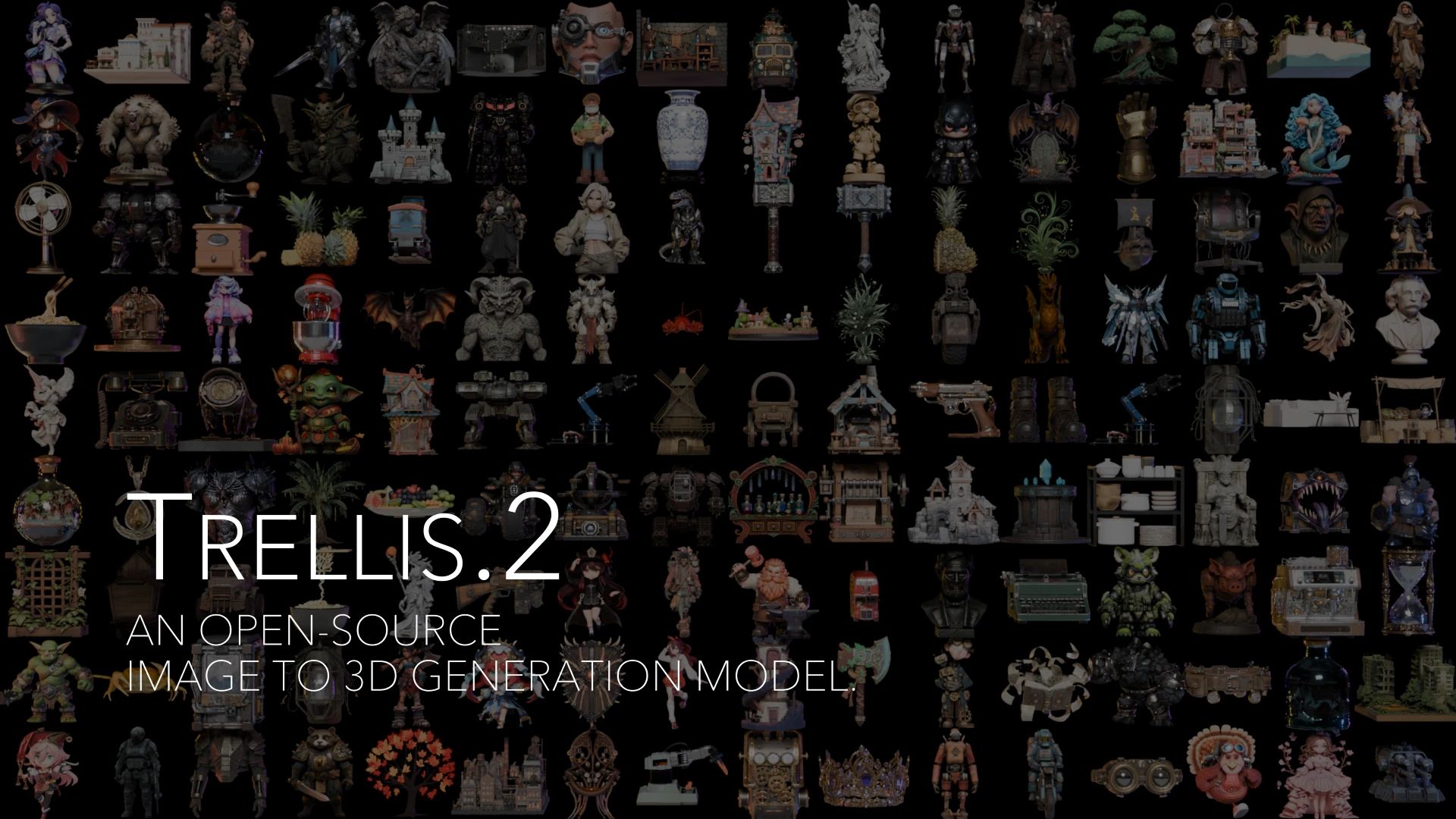
Microsoft has released Trellis 2, an open-source AI model designed to generate high-resolution 3D assets from single images. A key innovation in this release is the “Omni-Voxel Representation” (O-Voxel).
Unlike standard voxel grids that often struggle with detail or memory efficiency, the Omni-Voxel is a sparse structure that simultaneously encodes precise geometry and complex surface materials (like color, roughness, and transparency) in a single, compact format.
For 3D artists, this specific architecture is significant because it allows the model to generate “arbitrary topologies”, meaning it can theoretically create open surfaces more accurately (like clothing or leaves) as well as internal structures that typically confuse other AI generators.
Trellis 2 supports resolutions up to 1536³ and outputs directly to GLB and OBJ with physically based rendering (PBR) textures. It is available on Hugging Face under the MIT license..
Quick take: This is the first of these tools that I've seen actually handle transparency which is noteworthy. Demos across hard surface, interior structures, and texturing are all seriously impressive and in-line with my recent tests of Hunyuan 3D Studio.
Check out the Trellis 2
2. SpAItial Announces ‘Echo‘ World Generator
SpAItial has unveiled Echo, a generative 3D foundation model capable of creating interactive environments from text prompts or reference images.
Unlike tools that generate static, isolated objects, Echo focuses on “world generation,” producing navigable scenes that maintain consistency from all viewing angles. The technology relies on 3D Gaussian Splatting (3DGS) to render these environments in real-time directly within a web browser.
The tool aims to streamline workflows for environment artists and game developers by offering “zero-shot” geometry, meaning it infers depth and volume without needing a pre-existing 3D model.
Users can edit these generated worlds by removing objects or restyling elements while preserving the scene’s global structure. Echo is currently in closed beta, targeting use cases in gaming, architecture, and digital twinning where rapid environmental iteration is necessary.
Quick take: Having covered Marble and Moonlake recently, 2026 is shaping up to be the first year where future-leaning creators actually get hands‑on with full 3D AI world models, not just isolated asset generators. These tools will stay narrow and experimental for a while but paired with fast‑moving 3D Gaussian Splatting (3DGS) developments, they are likely to jump in quality and usefulness over the next 12 months.
Check out the release blog.
3. Plasticity 25.3 Releases
Plasticity has updated its NURBS modeling software to version 2025.3, introducing a new "Instances" workflow. This feature allows artists to create live copies of solids, sheets, and curves where changes to the original object are automatically mirrored across all instances. This replaces the need to manually duplicate and update repeated geometry, keeping project files lighter and speeding up iteration on complex models.
The update also adds "Plasticity Share," a web-based viewing tool. Users can now generate a URL to share 3D models directly with clients or collaborators, allowing them to rotate and inspect the geometry in a browser without needing the software or the original project files.
Additional improvements include real-time feedback for surface continuity, new SVG export options for documentation, and refined controls for handling edges on cylindrical surfaces.
Check out the official release.
4. OpenUSD Spec 1.0 Announced
The Alliance for OpenUSD (AOUSD) has officially released the OpenUSD Core Specification version 1.0. This document formally defines the foundational data models, geometry, and composition logic that make up Universal Scene Description (USD).
Previously, USD was largely defined by Pixar's specific open-source code library but this new specification separates the standard from that codebase, establishing a clear "canonical" rulebook for how 3D data should be structured and exchanged.
For the industry this is a major step toward true software interoperability because it allows developers to build independent USD implementations for tools (like game engines, modeling software, or web viewers) with the assurance that assets will behave consistently across platforms, rather than relying on a single vendor's interpretation.
This move is intended to accelerate USD adoption beyond film and VFX and will hopefully stabilize it for use in manufacturing, gaming, and digital twins.
Quick take: Finally.
5. Gnomon Workshop Learning Paths
The Gnomon Workshop has introduced Learning Paths, a new feature of the platform designed to structure its library of over 350 video tutorials into curated roadmaps. These paths organize individual workshops into logical progressions centered on specific career tracks, such as “Character Design,” “Environment Art for Games,” and “Visual Storytelling.”
This update addresses a common hurdle for self-taught artists: knowing which order to tackle complex subjects (and something my own 3D Art Curriculum aims to do).
Gnomon does this by grouping beginner, intermediate, and advanced workshops together, aiming to provide a clearer educational trajectory for students browsing their extensive catalog. The paths cover various disciplines and software packages, offering a more guided experience for artists looking to upskill in specific industry roles.
FROM THE COMMUNITY
Creator Spotlights
A few of my favorite bookmarks of the week:
1. Worldlabs API Beta running in Unity
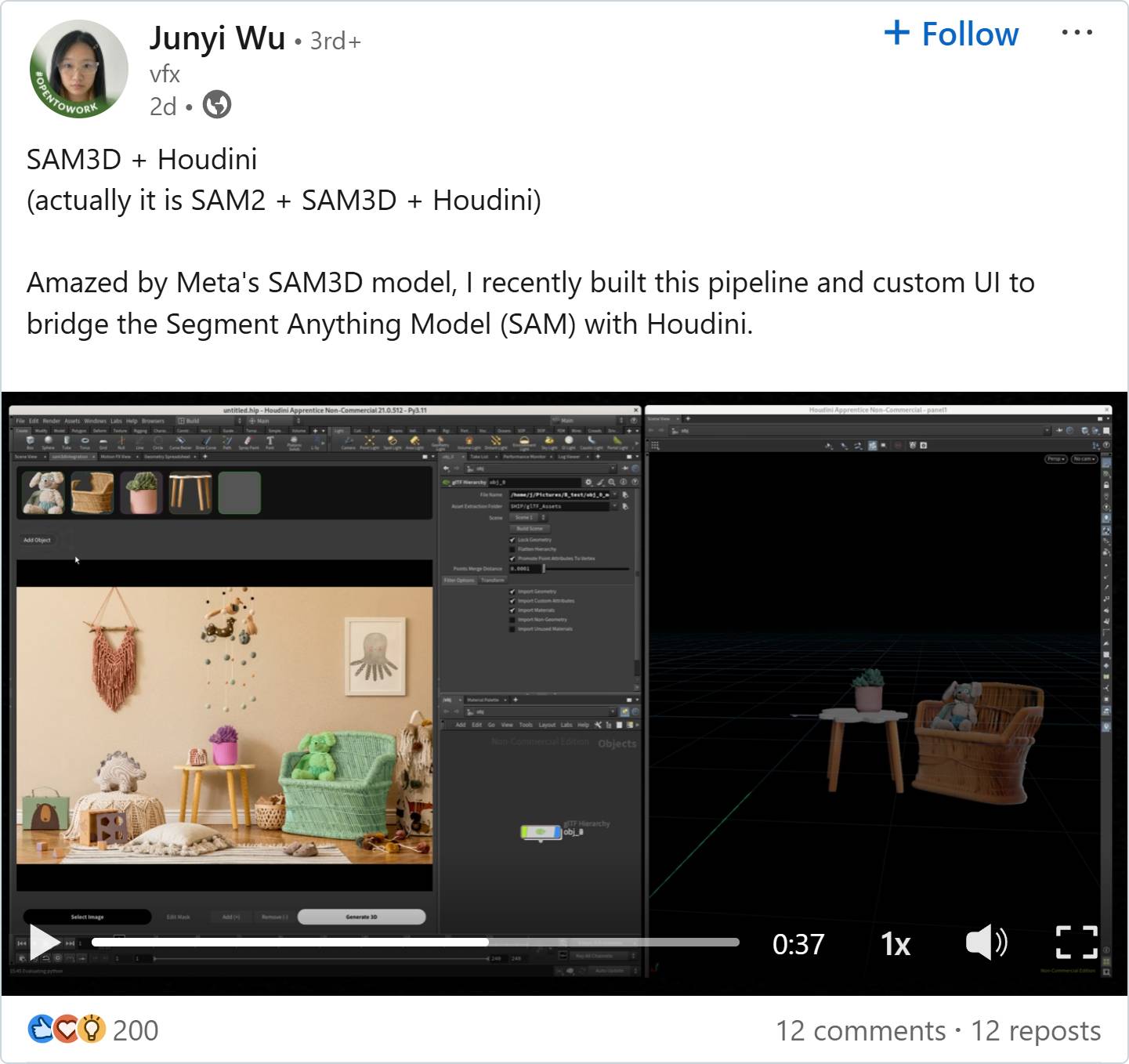
2. SAM3D + Houdini
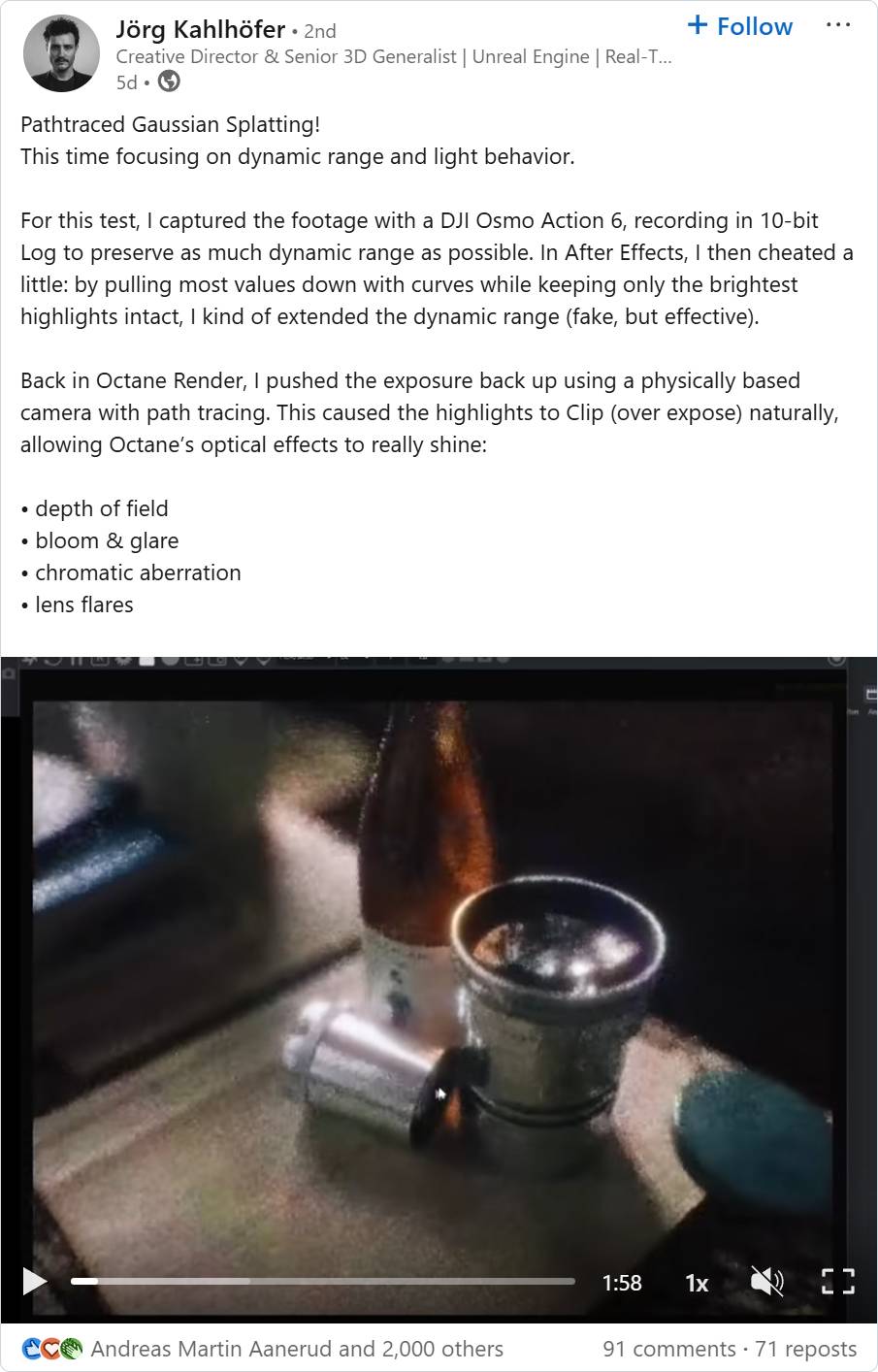
3. Path Traced Gaussian Splatting
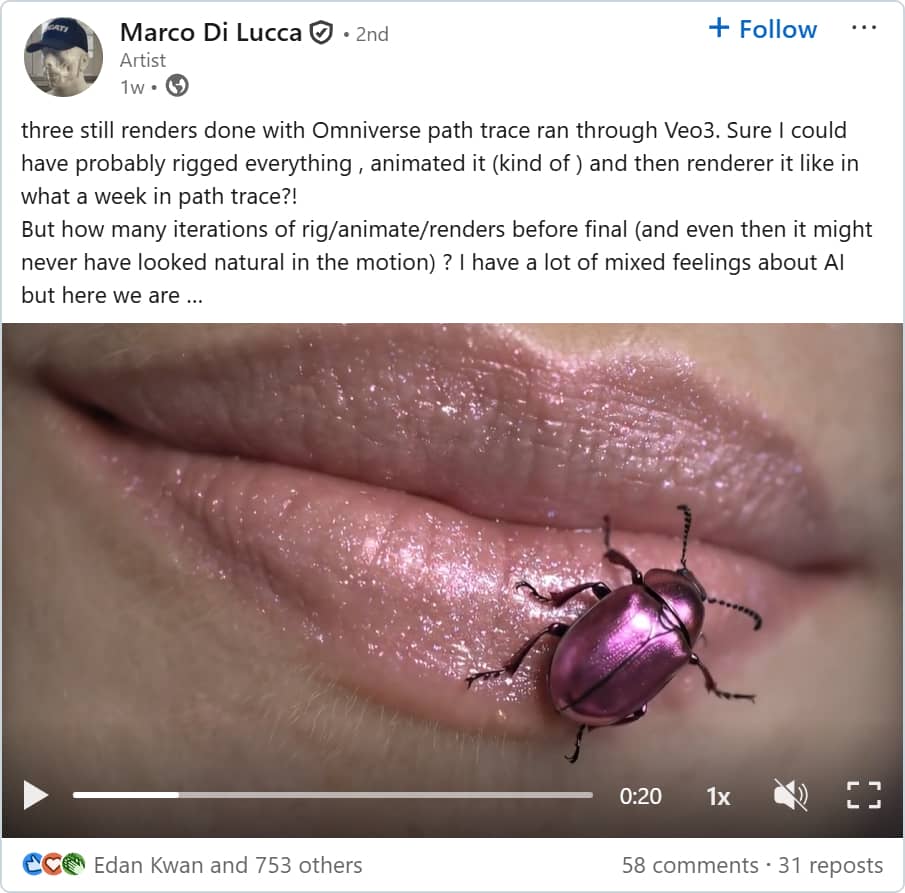
4. Omniverse Path Tracing + Veo3
Don't miss what's next
The next issue drops soon.